How to Choose the Right Industrial Hepa Filter for Your Needs?
Choosing the right Industrial Hepa Filter is crucial for effective air quality management. With industries facing increasingly stringent regulations, selecting the proper filter can significantly impact operational efficiency. According to a report by the Global HEPA Filter Market, demand for Industrial Hepa Filters is projected to grow by 10% annually.
Dr. Emily Grayson, a leading expert in industrial air filtration, emphasizes the importance of this selection. She states, "Choosing the right filter is not just a technical decision; it’s about creating a safe environment.” This highlights the responsibility that industries hold in maintaining clean air.
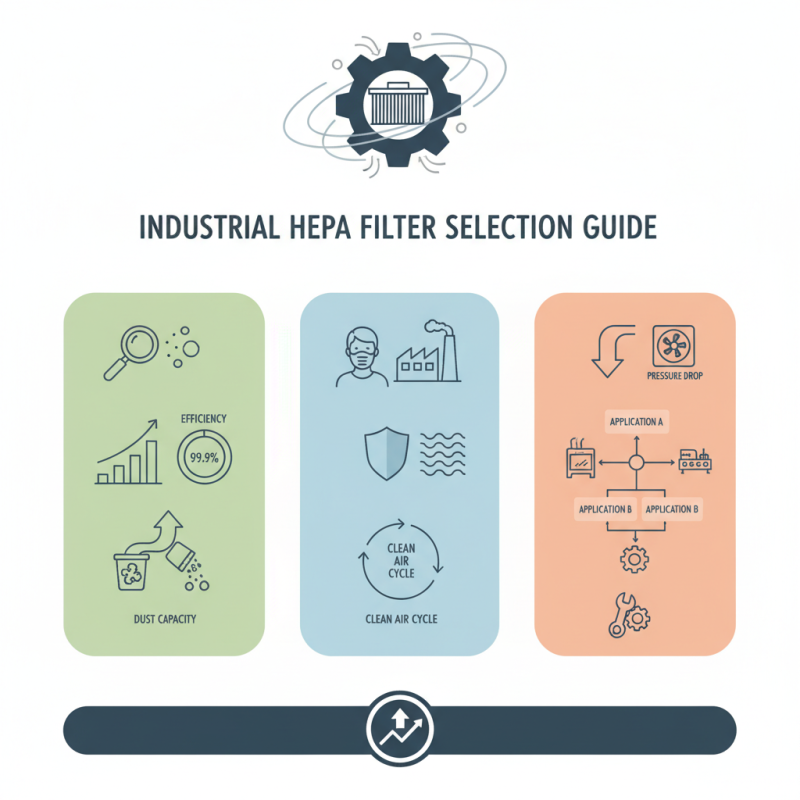
Proper filtration can prevent particulate contamination and enhance workplace safety. However, many businesses struggle with filter selection. Factors like filter efficiency, dust holding capacity, and pressure drop are critical. Too often, companies overlook the nuances of their specific applications. A misstep can lead to operational inefficiencies or increased health risks, underscoring the need for thoughtful decision-making in the selection of Industrial Hepa Filters.
Understanding the Basics of Industrial HEPA Filters
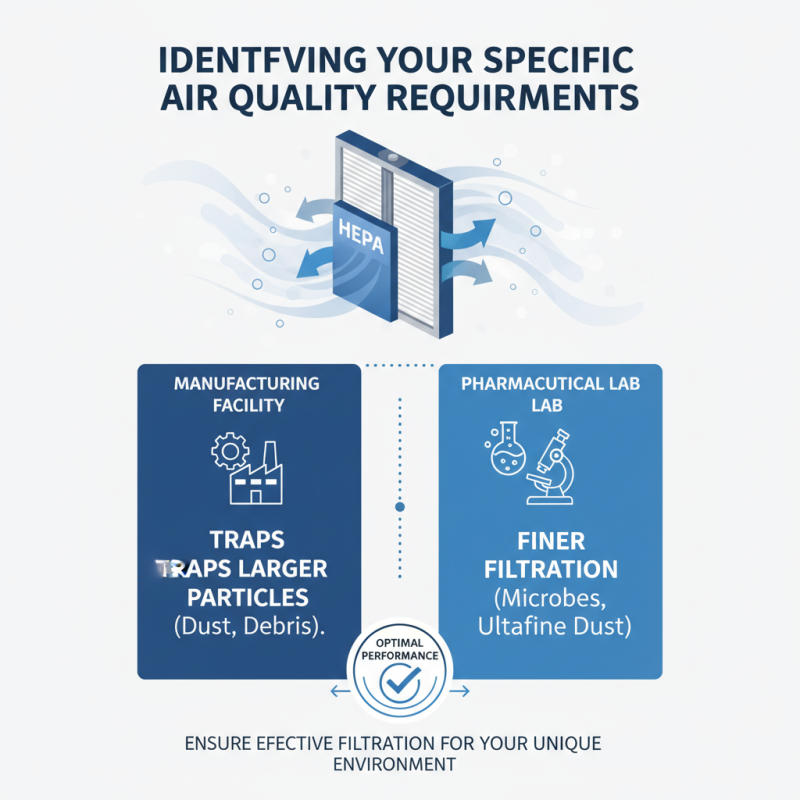
When selecting an industrial HEPA filter, understanding their basics is crucial. HEPA stands for High-Efficiency Particulate Air. These filters can capture up to 99.97% of particles measuring 0.3 microns or larger. They are essential in environments requiring strict air quality standards, such as cleanrooms, laboratories, and certain manufacturing sectors.
Industrial HEPA filters come in various classifications based on their efficiency and application. Knowing the specifics of your space helps in choosing the right filter. Consider the air quality you need to achieve. What contaminants are present? Airborne dust and allergens are common issues. Each filter has a rated airflow capacity, which impacts its effectiveness.
However, not all HEPA filters are perfect for every situation. Some may not efficiently capture specific chemicals. This gap in effectiveness requires critical assessment. Regular maintenance and timely replacements are needed for optimal performance. An overlooked filter may lead to increased airborne pollutants. Reflecting on these factors is essential for a well-informed decision.
How to Choose the Right Industrial Hepa Filter for Your Needs?
| Filter Type |
Efficiency Rating |
Application |
Airflow Capacity (CFM) |
Media Type |
| HEPA H13 |
99.95% |
Pharmaceuticals |
500 CFM |
Fiberglass |
| HEPA H14 |
99.995% |
Clean Rooms |
750 CFM |
Synthetic |
| HEPA Filters for Vacuum Systems |
99.97% |
Industrial Cleaning |
300 CFM |
Polyester |
| ULPA Filters |
99.999% |
Microelectronics |
1000 CFM |
Glass Fiber |
Evaluating Filter Efficiency Ratings and Standards
When selecting an industrial HEPA filter, understanding efficiency ratings and standards is crucial. HEPA stands for High-Efficiency Particulate Air. Filters must capture 99.97% of particles down to 0.3 microns to meet HEPA standards. However, not all HEPA filters perform the same in real-world applications. Evaluating their effectiveness depends on various factors, including environment and airflow patterns.
Consider these tips when assessing filter efficiency. Check for the filter's classification. True HEPA filters should accomplish the 99.97% standard under specified test conditions. Look for independent testing results. Certifications from trusted organizations validate performance claims. Take note of MERV ratings. A higher MERV rating often correlates with better filtration efficiency, but it may also restrict airflow.
In addition, reflect on the specific needs of your facility. Some environments may require filters with higher dust-holding capacity. These filters may perform better over time but could also be more expensive. Assess whether initial cost or long-term maintenance is more critical for your operation. Each choice comes with trade-offs. A deeper understanding of efficiency ratings will support better decision-making and improve air quality in your workspace.
Comparing Different HEPA Filter Types and Designs
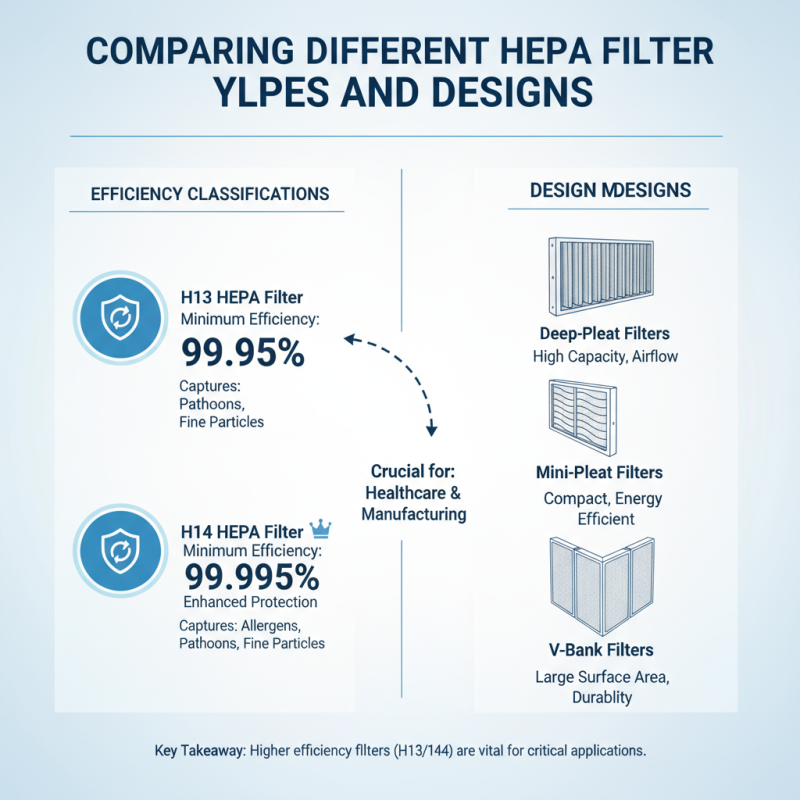
When selecting the right industrial HEPA filter, it's crucial to understand the various types and designs available. HEPA filters are classified based on their efficiency and design modifications. For instance, H13 and H14 filters have a minimum efficiency of 99.95% and 99.995% respectively. This means they can capture extremely small particles, including allergens and airborne pathogens. Heightened demand for high-efficiency filters has surged in sectors such as healthcare and manufacturing.
Bag filters and pocket filters are common designs in industrial settings. Bag filters often handle higher air volumes, whereas pocket filters are more compact, suitable for tighter spaces. According to a report by the Institute of Environmental Sciences, choosing the right filter can lead to a 30% reduction in energy costs over time. Filters with a larger surface area tend to last longer, but they can also be more costly upfront. This reality forces businesses to reflect on whether the initial investment aligns with long-term benefits.
While HEPA filters offer excellent air quality improvement, they have limits. Not every filter type suits every environment. Some may not capture volatile organic compounds (VOCs) effectively. Understanding specific operational needs will guide better maintenance decisions. Filter replacement can add complexity to budgeting. Hence, assessing the final choice critically is essential.
Determining Maintenance and Replacement Needs for HEPA Filters
Selecting the right HEPA filter involves understanding its maintenance and replacement needs. Regular maintenance is vital for optimal performance. According to industry reports, untreated HEPA filters can lose efficiency by up to 30% after prolonged use. Dust and particulates can clog filters, reducing airflow and increasing operating costs.
Scheduled inspections are essential. Many experts recommend checking filters every six months, especially in high-traffic areas. A filter that appears dirty may still perform adequately. However, relying on visual inspections alone can be misleading. A detailed assessment of airflow rates and pressure drops should guide your replacement strategy.
Understanding specific usage conditions is also crucial. For example, filters used in environments with heavy pollutants require more frequent changes. Industry standards suggest replacing HEPA filters every 1 to 3 years, but this is highly situational. Not every facility adheres to these recommendations. Therefore, facilities should develop a customized maintenance plan based on their unique circumstances and pollution levels.
Maintenance and Replacement Needs for HEPA Filters Over Time
This chart illustrates the recommended maintenance frequency for HEPA filters based on their usage over time. Regular maintenance ensures optimal performance and air quality filtration.