How to Choose the Right Paint Booth Fiberglass Filter for Your Needs?
Choosing the right Paint Booth Fiberglass Filter can greatly impact the quality of your work. Industry expert, John Smith, states, "A quality filter is essential for optimal paint booth performance." This highlights the importance of selecting a filter that meets specific needs.
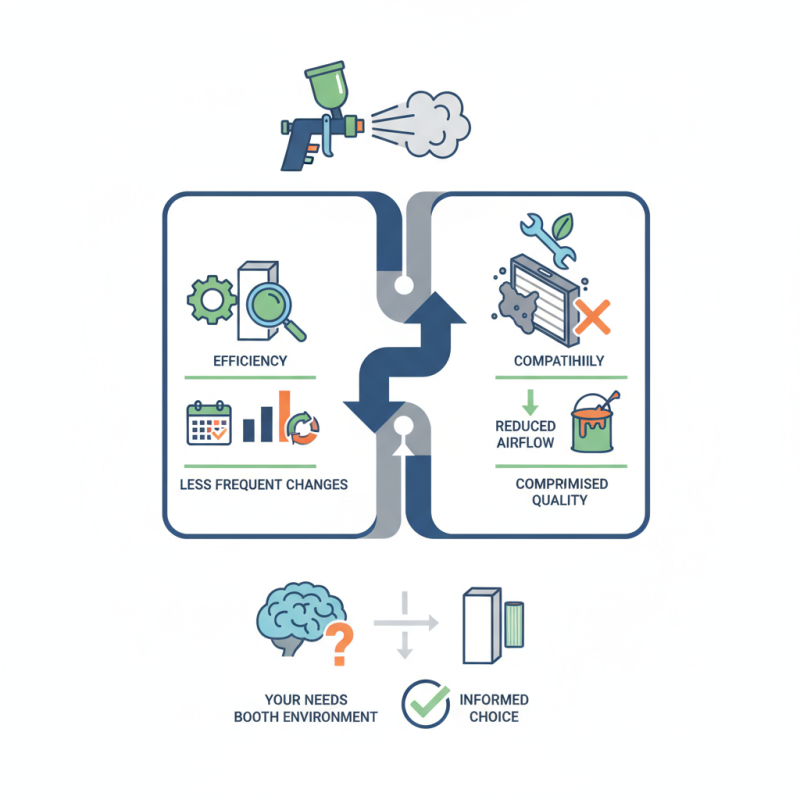
Paint Booth Fiberglass Filters are crucial in controlling airborne particles. They capture overspray, dust, and contaminants. When choosing, consider the filter's efficiency and compatibility. Not all filters are equal; some may require frequent changes, costing time and money.
Some may overlook the importance of maintenance. A neglected filter can reduce airflow and compromise paint quality. It’s important to reflect on your specific requirements. Not every filter works for every booth. Understand your environment and make informed choices.
Understanding the Different Types of Fiberglass Filters in Paint Booths
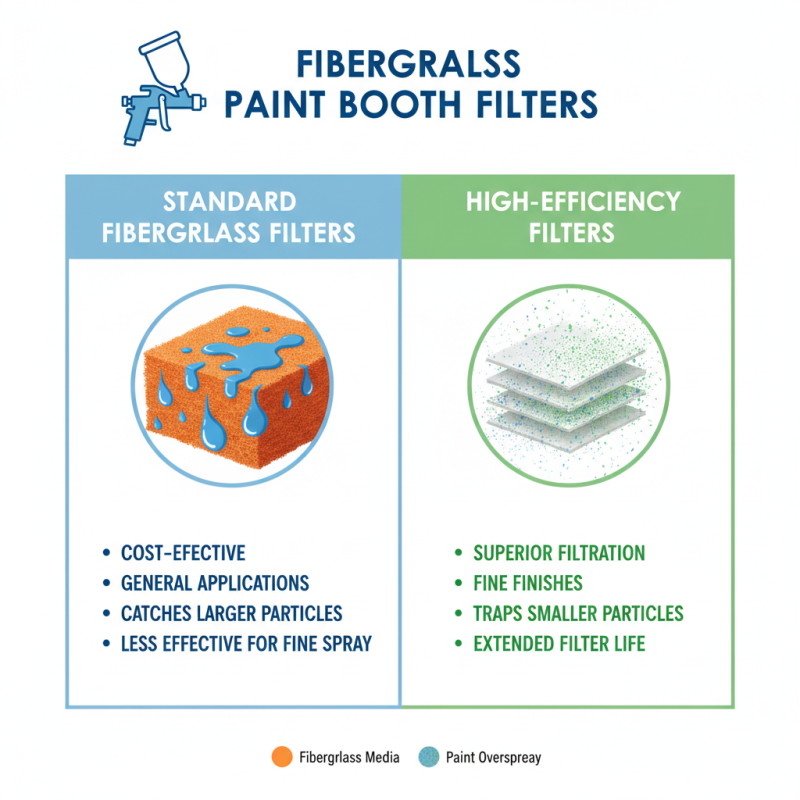
When it comes to fiberglass filters in paint booths, understanding their types is crucial. There are two main categories: standard fiberglass filters and high-efficiency filters. Standard fiberglass filters are cost-effective and good for general applications. They catch larger particles but may not be ideal for finer overspray.
High-efficiency fiberglass filters, on the other hand, capture smaller particles. They are essential for operations requiring higher cleanliness standards. According to industry reports, using high-efficiency filters can reduce airborne contaminants by up to 99%. This leads to a cleaner workspace and better paint finishes.
Tip: Regularly inspect and maintain your filters. Clogged filters can hinder airflow, leading to poor spray patterns.
Another consideration is the thickness of the filter. Thicker filters tend to hold more dust and pollutants. However, they can also restrict airflow. Finding the right balance is key.
Tip: Test different filter types to see what works best for your specific needs. Personalizing filter choice can have a significant impact on paint quality. Remember, it may take some trial and error to find your optimal solution.
Factors to Consider When Selecting Fiberglass Filters for Paint Booths
When choosing fiberglass filters for paint booths, several factors should be considered. The filter's efficiency is crucial. Higher efficiency filters capture more airborne particles, contributing to cleaner air and enhancing paint quality. However, they may also restrict airflow. It's a balancing act between filtration and proper ventilation.
Another important aspect is the filter's thickness. Thicker filters can hold more contaminants, extending their lifespan. Yet, they may require more energy to push air through, which could lead to increased operational costs. Some users overlook the need for regular maintenance. Dirty or clogged filters fail to perform effectively, compromising air quality.
Additionally, consider the filter's compatibility with your booth's system. Improper fit can lead to leaks. As a result, a significant amount of overspray could escape, impacting workspace cleanliness. Different applications may require specific filter types, so reflect on your unique needs. While there’s no one-size-fits-all solution, careful evaluation of these factors can lead to better choices.
Industry Standards and Regulations Impacting Paint Booth Filter Choices
When selecting a fiberglass filter for your paint booth, industry standards play a crucial role. These regulations often dictate filter performance and efficiency. Understanding them can help prevent costly mistakes and ensure compliance. Filters must meet specific ratings for particulate size and air flow. This knowledge is vital for choosing the right filter type for the job.
Another consideration is the environment of your paint booth. Different materials respond differently to various chemicals. Inadequately chosen filters may not trap fumes effectively. This can lead to hazardous conditions. Ask about the specific requirements for your industry to determine the best fit. Not all filters are created equal; some may deteriorate faster in demanding environments.
Take the time to evaluate your options carefully. Also, you should think about maintenance. Filters require regular replacement to maintain optimal performance. Ignoring this can result in increased particulates in the air. Tracking replacement schedules can be challenging. Many businesses overlook this aspect, leading to operational inefficiencies. Reflect on your current practices and consider improvements for better compliance and safety.
Analyzing Filter Efficiency Ratings and Their Importance in the Selection Process
Choosing the right fiberglass filter for a paint booth is crucial. Filter efficiency ratings provide essential insights into performance. Different filters have varying levels of effectiveness. Some filters may claim high efficiency but may not perform well under real conditions. Understanding these ratings helps in making informed decisions.
Not all fiberglass filters are created equal. Look for those that have been tested and rated by independent organizations. This adds a layer of credibility to the claims made. Efficiency ratings usually indicate how much particles a filter can trap. However, it’s essential to consider the environment in which the filter will be used. Filters may differ in their performance based on humidity and temperature.
When evaluating filters, think about your specific needs. Do you require a filter that catches smaller particles? Or is it sufficient to catch larger contaminants? Sometimes, filters may need frequent replacement, impacting costs. This can lead to reflections on maintenance schedules and overall efficiency. In the end, don’t solely rely on ratings; practical experience is invaluable in the selection process.
Efficiency Ratings of Fiberglass Filters for Paint Booths
Maintenance and Replacement Frequency for Optimal Fiberglass Filter Performance
When it comes to maintaining optimal fiberglass filter performance, understanding the proper maintenance and replacement frequency is crucial. Research shows that filters can capture up to 99% of airborne particles. Yet, neglecting timely maintenance can reduce their effectiveness significantly.
Regular inspections are essential. Filtration experts recommend checking filters at least once a month. If usage is heavy, such as in large production environments, more frequent checks are warranted. Clogged filters can restrict airflow, leading to higher energy costs and decreased air quality. Filters should be replaced when they show significant signs of wear or contamination.
Cleaning methods vary. Some filters are washable and reusable, while others require replacement. A recent study indicated that replacing filters every 3-6 months maintains system efficiency. However, relying solely on fixed schedules can be misleading. Environmental factors, like humidity and dust levels, can accelerate wear. Always base replacement on observable conditions. This proactive approach will ensure a safer and more efficient working environment.